Select Page

Turn Sunshine into Savings

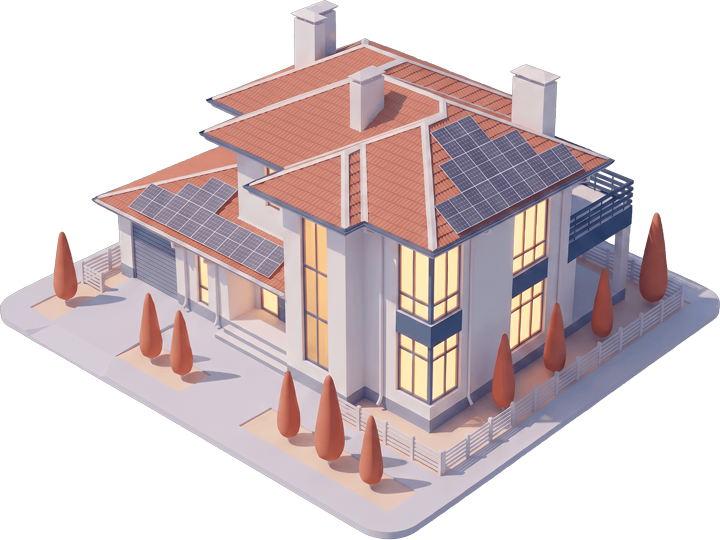
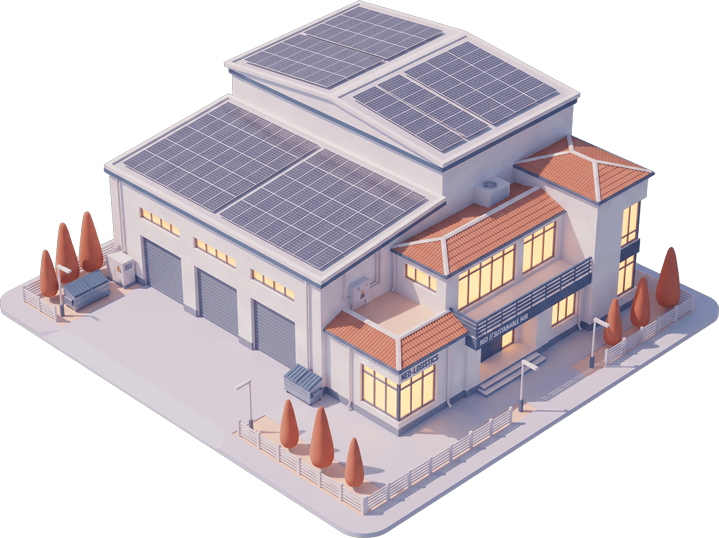
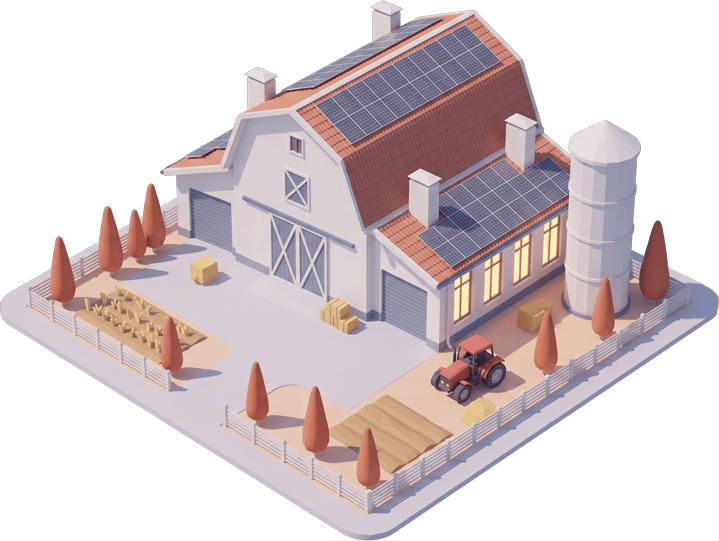
For Home, Business and Farm applications.
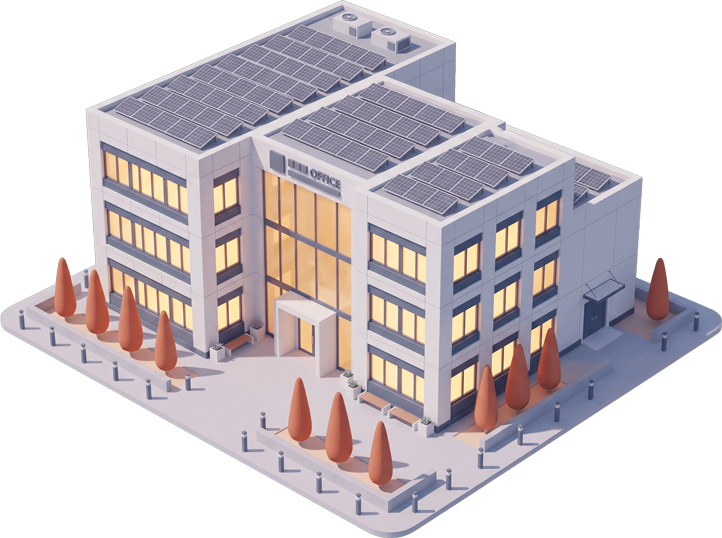
Reliable Solar Energy. Designed for Real Life.


Request an Assesment

With Solar EPC, you get professionally engineered solar and storage systems designed for long-term reliability, performance, and savings.

Better for your operations. Better for your budget. Better for energy stability.


Turn Solar Energy Into Operational Certainty


As a Solar EPC client, you get a fully engineered energy system designed, installed, and supported by a single accountable EPC partner.

Solar EPC designs and delivers fully integrated solar and energy storage systems that reduce electricity costs, improve energy reliability, and give you long-term control over your energy supply.

No complexity. No uncertainty. No fragmented suppliers.


Dependable Energy

Engineered systems designed to deliver consistent performance during load shedding and grid instability.

Energy Independence

Reduce reliance on the grid and take greater control of rising electricity costs and supply uncertainty.

Peace of Mind

From engineering and installation to compliance and ongoing support, SolarEPC manages the entire process.

Cost Savings

Reduce electricity costs with solar and battery solutions designed around your energy usage and long-term savings goals.

Tailored System Design

Every solution is designed around your property, consumption profile, and operational requirements — never a one-size-fits-all approach.

Request a Free Site Assessment

Why Solar EPC

Full EPC delivery (engineering, procurement, construction in-house)

Transparent ROI modelling before installation
Residential, commercial, industrial, and utility-scale capability
Engineering oversight on every project

End-to-end project accountability
12-month post-installation support included
Ongoing maintenance SLA available

A Solar Solution Designed for Your Energy Needs.

As a SolarEPC client, you receive a fully engineered solar and energy storage solution designed specifically for your property, consumption profile, and operational requirements.We harness solar energy through professionally designed systems that reduce electricity costs, improve energy reliability, and deliver long-term control over your power supply. Every solution is tailored to your needs, whether residential, commercial, industrial, or agricultural, ensuring the right system design, performance, and return on investment.

See what you can save

Affordable plans customised for you.

On average it gives 10 - 20kWh of daily solar protection
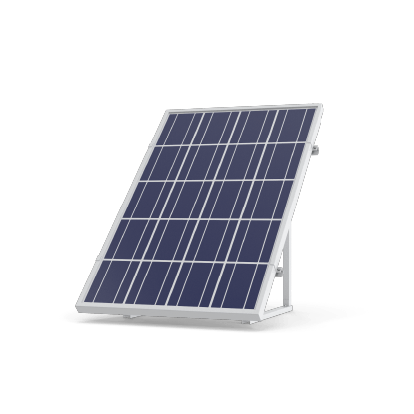
Solar panels
Solar Panels 8 x 450-460W mono
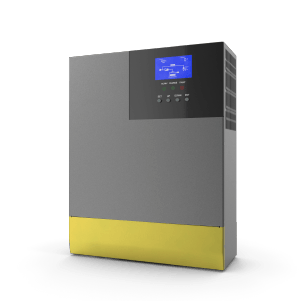
Inverter
Inverter 3.6kW hybrid

When you submit your enquiry

We schedule a consultation or site assessment

We analyse your energy requirements and property

We design a tailored solar and energy storage solution

You receive a detailed proposal and ROI model

Once approved, we proceed with installation scheduling

We complete installation, commissioning, and certification

Your system goes live and starts delivering savings

Ongoing support and maintenance are provided as required

Request a Free Site Assessment

Frequently
Asked Questions 

Everything you need to know about solar EPC, BESS, PPAs,
and large-scale infrastructure projects across South Africa..

  • RESIDENTIAL
  • COMMERCIAL & INDUSTRIAL
  • POWER PURCHASE AGREEMENTS
  • BESS SYSTEMS
  • INFRASTRUCTURE / IPP EPC
  • ARTICLES

Grid-tie, hybrid, and off-grid solutions for homeowners across South Africa.

Residential Solar

Most South African homes require systems between 5 kWp and 15 kWp, depending on monthly consumption and whether you want full energy independence or simply load-shedding protection. We conduct a detailed energy audit before recommending any system size to ensure your investment is accurately sized.
Grid-tie: Solar feeds directly into your home and exports surplus to the grid. No battery — no protection during load-shedding unless your inverter has a grid-island function. Hybrid: Solar + battery storage + grid connection. The most popular choice in South Africa — you have backup power during outages and reduce your grid consumption significantly. Off-grid: Fully independent of Eskom. Requires a larger battery bank and generator backup. Suited to farms, lodges, and remote properties.
A standard residential installation is typically completed within 2 to 4 days once all equipment has been delivered to site. Complex rooftop configurations, multi-phase homes, or installations requiring extensive cable runs may take slightly longer. Our project manager will provide you with a confirmed schedule before work begins.
Yes. In South Africa, any grid-connected solar installation requires CoC (Certificate of Compliance) sign-off from a registered electrician and notification to your municipality. If you intend to feed excess energy back into the grid (net metering), a separate municipal application is required. SolarEPC manages the full compliance and approval process on your behalf.
We provide full manufacturer pass-through warranties on all major components — typically 10–12 years on inverters, 10 years on battery storage, and 25–30 years performance warranty on panels. SolarEPC also provides a workmanship warranty on all installation labour. We only work with Tier 1 panel manufacturers and globally recognised inverter brands.
We offer several pathways including cash purchase, bank-financed instalment agreements through our lending partners, and our own in-house residential loan book for qualifying clients. Monthly repayments are typically lower than your current electricity bill saving, meaning most systems are cash-flow positive from day one.

Rooftop and ground-mount solar for businesses, warehouses, factories, and retail centres.

Commercial & Industrial

Our C&I division handles projects from 50 kWp up to several MWp. This includes rooftop installations on factories and warehouses, carport canopy systems, and ground-mount arrays on commercial properties. We are experienced in complex multi-phase, high-voltage grid connections and work closely with DNOs (Distribution Network Operators) on larger projects.
Most C&I solar projects in South Africa deliver a payback period of 3 to 5 years on a cash purchase, with IRRs typically between 20% and 35% depending on tariff, consumption profile, and whether battery storage is included. We provide a full financial model and sensitivity analysis as part of our proposal process.
In most cases, no. Our teams are experienced in live-site installations and schedule critical switchover work during off-peak hours or weekends to minimise disruption to your operations. A detailed installation programme is agreed with your facilities team before mobilisation.
Yes, provided landlord consent is obtained in writing. We regularly work with property owners and commercial tenants to structure landlord-tenant solar agreements that benefit both parties. A PPA structure (see PPA section) is often the preferred route in leased premises as it avoids capital expenditure by the tenant entirely.
We design all C&I systems with future scalability in mind — ensuring inverter capacity, DB infrastructure, and cable sizing accommodate future expansion. Adding additional panels or battery storage at a later stage is straightforward if the initial system was designed correctly. We document all as-built drawings and system specifications for this purpose.

Zero-capital solar energy with long-term tariff certainty through a structured
PPA.

Power Purchase Agreements

A PPA is a long-term contract under which SolarEPC (or a special purpose vehicle) owns, installs, and maintains a solar system on your premises. You simply purchase the electricity generated at a pre-agreed tariff — typically well below your current Eskom or municipal rate. There is no capital outlay, no maintenance responsibility, and no system ownership risk for the client.
PPA terms in the South African C&I market typically range from 10 to 20 years. Annual tariff escalation is negotiated upfront and is commonly set at 5% to 8% per annum — well below the historical Eskom tariff escalation rate of 12%–15% per annum. This provides your business with meaningful long-term energy cost certainty.
SolarEPC retains full responsibility for the operation and maintenance of the system throughout the PPA term. This includes panel cleaning, inverter servicing, monitoring, and any component replacements. Since we are incentivised by energy generation, it is in our direct interest to keep the system performing at optimal output.
At the end of the agreed PPA term, clients typically have three options: (1) purchase the system at a pre-agreed residual value, (2) extend the PPA at a renegotiated rate, or (3) have the system decommissioned and removed at no cost. Most clients elect to purchase the asset, which at that point will have significant remaining useful life.
PPAs are structured to accommodate business changes. The agreement can typically be novated to a new occupant or property owner subject to creditworthiness assessment. In certain circumstances, early termination provisions exist within the contract, subject to a fair buy-out calculation. We structure our PPAs to be commercially sensible and not a burden on legitimate business transitions.
A PPA is ideal for businesses that want immediate electricity cost savings with zero capital expenditure, or those whose balance sheets or shareholders prefer not to capitalise the asset. It is particularly well-suited to leased premises, businesses with constrained capex budgets, and property funds hosting multiple commercial tenants. Our team will model both a capex-purchase and PPA scenario side-by-side so you can make an informed decision.

Battery Energy Storage Systems for demand management, backup, and grid
independence.

BESS Systems — C&I

A Battery Energy Storage System (BESS) stores electrical energy — either from solar generation or the grid — and dispatches it when required. For C&I clients, BESS delivers three primary value streams: backup power during outages, peak demand shaving (reducing costly demand charges on your municipal bill), and time-of-use arbitrage (storing cheap off-peak energy and using it during expensive peak periods).
Municipalities charge C&I clients a demand charge based on their highest 30-minute peak consumption reading in a billing period. A BESS can reduce or flatten these peaks by discharging during high-consumption periods, directly reducing the demand charge line item on your bill. Depending on your tariff structure and load profile, demand charge savings alone can deliver a compelling standalone ROI for a BESS even without solar.
In most cases, yes — provided the existing inverter is battery-compatible or can be replaced with a hybrid inverter. We conduct a technical assessment of your existing system before recommending a BESS retrofit. In some older installations, a DC-coupled or AC-coupled BESS addition is the most cost-effective path. We present all viable options with a comparative financial model.
Large BESS systems require careful consideration of fire suppression, ventilation, thermal management, and electrical protection. SolarEPC designs all BESS installations in compliance with relevant SANS standards and international best practice (IEC 62619). We engage certified fire engineers and ensure all installations meet municipal and insurance requirements. Battery management systems (BMS) with active cell balancing and thermal runaway protection are standard on all systems we deploy.
Quality LFP batteries deployed in C&I applications typically retain 80% capacity after 10–15 years of daily cycling. At end-of-life, battery modules can be replaced without replacing the full system (inverter, BMS, and enclosure are retained). The declining cost curve of battery technology means replacement modules in 10–15 years will be significantly cheaper than today's prices in real terms.

Utility-scale EPC contracting, independent power producer projects, and grid
infrastructure.

Infrastructure & IPP EPC

An EPC (Engineering, Procurement & Construction) contractor takes single-point responsibility for the complete delivery of a power project — from detailed engineering design through to equipment procurement, civil works, electrical installation, commissioning, and handover. SolarEPC delivers full-scope EPC services for utility-scale PV and hybrid projects, providing the project developer or IPP with a single accountable party and a fixed-price, fixed-programme contract.
Our infrastructure division targets projects from 1 MWp to 100 MWp+, including REIPPPP bid window projects, NERSA-licensed embedded generation, wheeling projects, and private IPP developments. We bring in-house capability across civil, structural, DC/AC electrical, and SCADA/monitoring, supplemented by our established subcontractor network for larger civil scopes.
The Renewable Energy Independent Power Producer Procurement Programme (REIPPPP) is the South African government's primary mechanism for procuring privately developed renewable energy capacity through competitive bid rounds. SolarEPC participates as an EPC contractor to IPP developers and consortia who are bidding or awarded projects under this programme, providing the technical and construction delivery capability behind the developer's project.
Grid connection for utility-scale projects in South Africa involves engagement with Eskom Transmission or the relevant Distribution Network Operator, a formal grid connection application, power systems studies (load flow, fault level, protection coordination), and compliance with the Grid Code. SolarEPC's engineering team manages this process from application through to energisation, including liaison with Eskom and independent power systems engineers.
Wheeling refers to the transmission of privately generated electricity across the public grid from a generator to an end-user (offtaker) at a different location. Following NERSA's evolving licensing framework, wheeling is increasingly viable in South Africa for C&I and large industrial offtakers. SolarEPC supports wheeling projects from the generation asset EPC side, working alongside energy traders, legal advisors, and the relevant network operator to deliver the physical infrastructure component.
SolarEPC operates a formal Quality Management System and HSE framework aligned with ISO 9001 principles and South African OHS Act requirements. All utility-scale projects are staffed with a dedicated HSE officer, and our project management methodology includes structured hold points, inspection and test plans (ITPs), and independent commissioning verification. We maintain comprehensive as-built documentation and handover packs for all projects.